
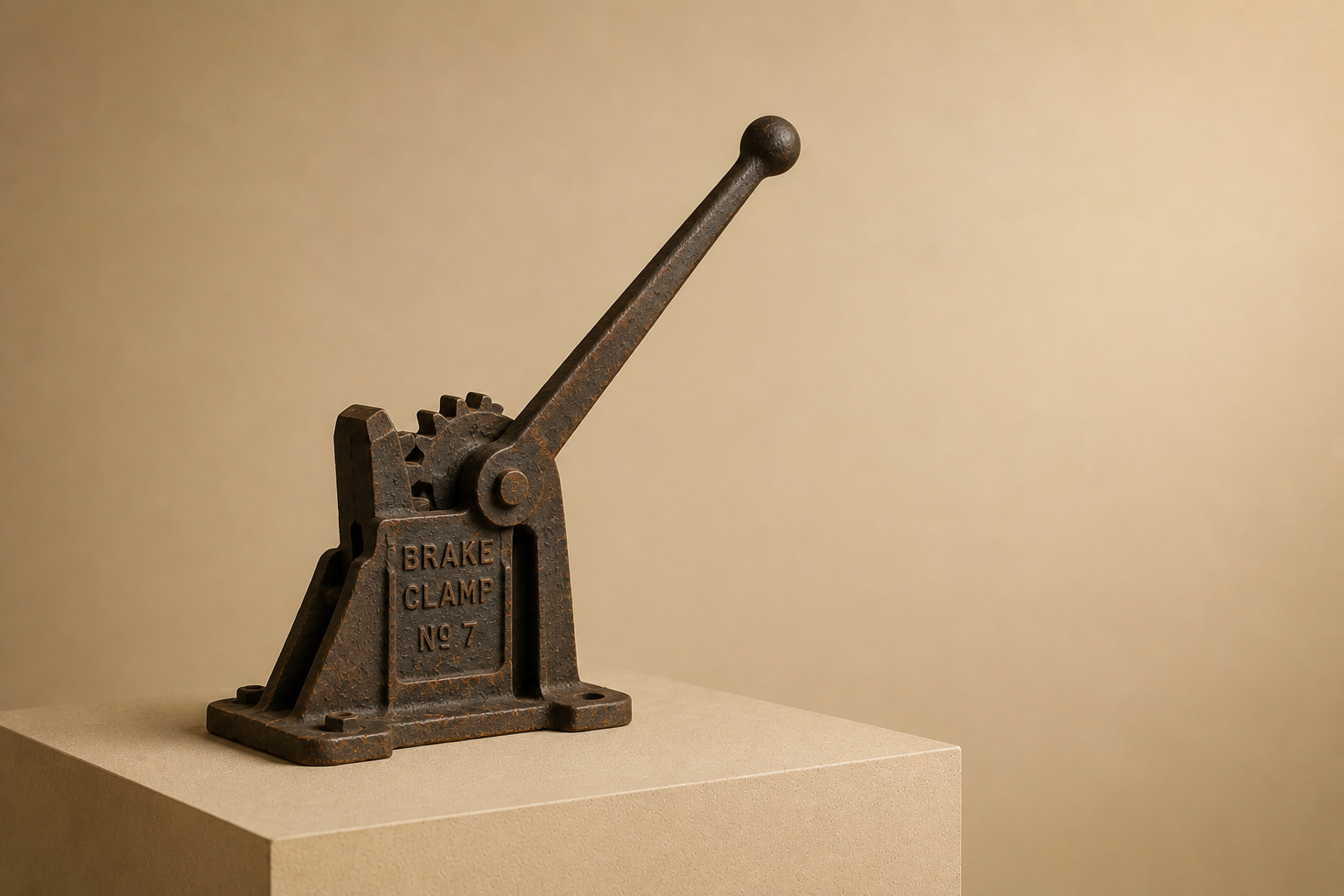
Have you ever tried driving with the parking brake partially engaged? The car still moves. You can accelerate. You can even reach your destination. But everything takes more effort than it should.
The engine works harder. Fuel disappears faster. Progress feels frustratingly slow.
Many people live exactly this way. From the outside, they’re doing everything right. They work hard. They set goals. They read books. They stay busy.
Yet they never seem to build real momentum. Not because they lack talent. Not because they lack opportunity. But because they’re unknowingly pressing the brake.
That brake is made of limiting beliefs, and unlike the friction we’ve discussed so far, these aren’t external obstacles. They’re internal.
The Stories We Mistake for Truth
Every person develops a collection of beliefs about themselves. Some are empowering. Others quietly become invisible rules.
“I’m not a leader.”
“I’m bad with money.”
“I’m not creative.”
“I always quit.”
“I’m too old to start over.”
“I’ve missed my chance.”
What’s remarkable is that very few of these statements are objective facts. They’re conclusions, often formed years earlier—sometimes after a single painful experience.
Over time, those conclusions harden into identity, and identity is incredibly powerful. People naturally behave in ways that reinforce who they believe they are.
If you believe you’re “not confident,” you’ll avoid situations that require confidence.
If you believe you’re “bad at relationships,” you’ll unconsciously expect them to fail.
Your brain isn’t trying to sabotage you. It’s trying to stay consistent. The problem is that consistency isn’t always growth.
The Brake Doesn’t Stop You
(It Just Makes Everything Harder)
One of the biggest misconceptions about limiting beliefs is that they prevent action altogether. Usually they don’t. Instead, they make every action more exhausting.
- You hesitate before speaking.
- You overthink every decision.
- You delay starting.
- You abandon projects too early.
- You need constant reassurance.
- You interpret setbacks as proof that you were never capable in the first place.
From the outside, it looks like procrastination. From the inside, it’s resistance.
If you’re driving around with the brake engaged, you could blame the car. But the problem isn’t the engine. It’s the unnecessary resistance.
Where Do These Brakes Come From?
Most limiting beliefs begin as protective mechanisms.
A child who gets laughed at decides:
“I shouldn’t speak up.”
Someone who gets rejected decides:
“I’m not lovable.”
Someone who fails publicly concludes:
“I’m not good enough.”
At the time, these beliefs may have helped us avoid pain. Years later, they quietly limit our future. The belief survives long after the original danger has disappeared. What once protected you may now be preventing you from growing.
Releasing the Brake
The good news is that beliefs aren’t permanent. They’re habits of thought, and habits can change.
1. Notice the Automatic Story
Pay attention to the thoughts that appear whenever you face something difficult. What do you immediately tell yourself?
Don’t judge the thought. Simply observe it. Awareness always comes before change.
2. Ask, “Is This Actually True?”
Our brains often confuse familiarity with truth. Challenge your assumptions.
Is there real evidence? Or are you repeating a conclusion you reached years ago?
Many beliefs fall apart the moment we examine them honestly.
3. Separate Identity from Experience
There’s an enormous difference between:
“I failed.”
and
“I am a failure.”
One describes an event. The other creates an identity. Never confuse what happened with who you are.
4. Collect New Evidence
Confidence doesn’t come from repeating positive statements. It comes from accumulating proof.
Each difficult conversation.
Each completed project.
Each promise you keep to yourself.
Each small act of courage.
These experiences gradually rewrite your internal story.
5. Practice Acting Before You Feel Ready
Most people believe confidence comes first. It rarely does. Action creates confidence, not the other way around.
You’ll almost always feel uncertain before doing something meaningful. That’s not a sign to stop. It’s a sign you’re growing.
Your Comfort Zone Is Designed to Keep You Comfortable
(Not Successful)
Comfort isn’t the enemy. Permanent comfort is. Every meaningful achievement requires entering unfamiliar territory.
The first presentation.
The first business.
The first difficult conversation.
The first workout.
The first “yes.”
Your comfort zone expands every time you step slightly beyond it. Not through giant leaps, but through repeated small stretches. Momentum grows the same way muscles do, one repetition at a time.
Replace the Brake with a Better Question
Instead of asking:
“What if I fail?”
Ask:
“What if this is the opportunity that changes everything?”
Instead of asking:
“Am I good enough?”
Ask:
“What can I learn from trying?”
Instead of asking:
“What if people judge me?”
Ask:
“Whose opinion matters most?”
The questions you repeatedly ask determine the stories you repeatedly tell. And the stories you repeatedly tell determine the life you gradually create.
The Road Ahead
Removing friction isn’t only about letting go of the past. It’s also about refusing to let outdated beliefs control your future. Every time you challenge a limiting belief, you release a little more pressure from the brake pedal.
Progress becomes easier.
Decisions become clearer.
And momentum begins to build.